
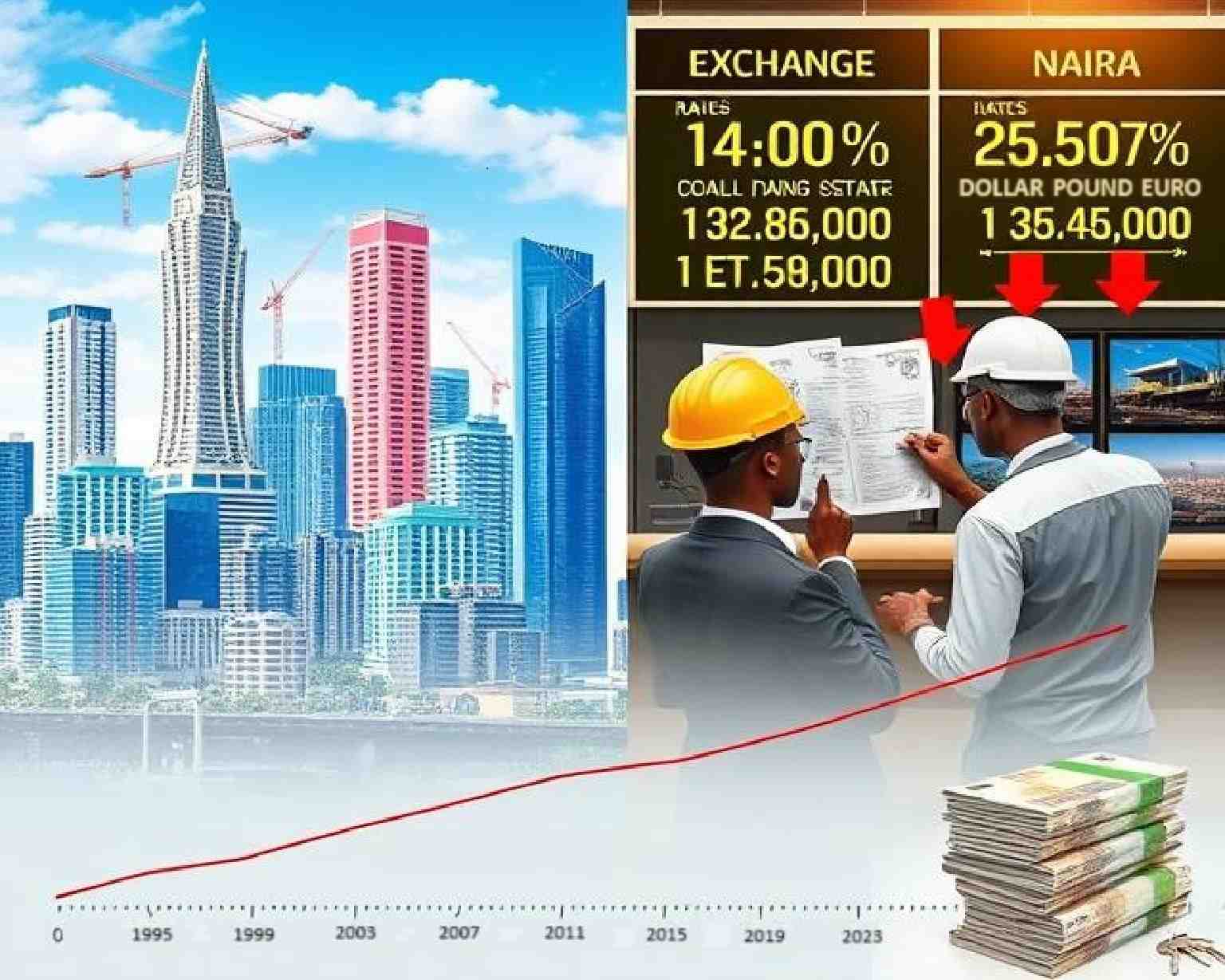
The Nigerian real estate market has undergone significant transformations in recent years, with currency devaluation playing a critical role in reshaping investment dynamics. The continued depreciation of the Naira against major international currencies has created both challenges and opportunities for local and foreign investors in Nigeria’s property market.
Historical Context of Naira Devaluation
Nigeria’s currency has experienced several devaluation cycles over the past decade, with particularly steep declines since 2020. In early 2023, the Central Bank of Nigeria (CBN) implemented substantial foreign exchange reforms that led to a significant devaluation, with the Naira losing over 40% of its value in a matter of months. By mid-2024, further pressure on the currency resulted in additional depreciation.
This currency instability reflects broader economic challenges including dependence on oil exports, foreign exchange shortages, and persistently high inflation rates. Understanding this context is essential for evaluating real estate investment prospects.
Impact on Local Property Buyers
For Nigerian citizens and residents, the devaluation has created a complex landscape:
- Reduced purchasing power: The average Nigerian now requires significantly more Naira to purchase the same property compared to pre-devaluation periods
- Shift in housing preferences: Many buyers have adjusted expectations, looking toward smaller units or less prime locations
- Increased attraction of real estate as an inflation hedge: Despite challenges, property continues to serve as a store of value in an inflationary environment
- Construction cost increases: Rising prices for imported building materials have driven up development costs, which are typically passed on to buyers
Middle-class Nigerians have been particularly affected, with many now priced out of property markets in major urban centers like Lagos, Abuja, and Port Harcourt.
Opportunities for Foreign Investors
The devaluation presents distinct advantages for foreign investors with hard currency:
- Discounted asset prices: Properties that might have cost $500,000 before devaluation may now be available for $300,000 or less in dollar terms
- Higher rental yields: While property prices in Naira have increased, they haven’t kept pace with devaluation, creating opportunities for attractive yields when calculated in foreign currency
- Diversification benefits: Nigerian real estate offers portfolio diversification for international investors seeking exposure to frontier markets
- Long-term appreciation potential: Despite current economic challenges, Nigeria’s demographic trends suggest strong long-term demand for quality housing
Institutional investors from Europe, North America, and the Middle East have shown increased interest in premium commercial and residential developments, particularly in Lagos.
Market Segment Analysis
The impact of devaluation varies significantly across different market segments:
Luxury Residential
The high-end residential sector has demonstrated relative resilience, particularly in exclusive neighborhoods like Ikoyi and Banana Island in Lagos. Properties in this segment are often priced in dollars or pound sterling, providing a natural hedge against devaluation. However, transaction volumes have declined as the pool of eligible buyers shrinks.
Mid-Market Residential
The middle-market segment has experienced the most significant disruption. Rising construction costs and mortgage interest rates have pushed developers to raise prices, while potential buyers face diminished purchasing power. This has led to increased inventory levels and extended sales cycles in many projects.
Commercial Real Estate
Office spaces and retail properties have shown mixed performance. Prime office buildings with multinational tenants have maintained stronger occupancy rates, while secondary locations struggle with vacancies. The retail sector faces challenges as consumer spending power declines, though well-positioned malls continue to attract investment.
Land Banking
Raw land investments, particularly in expanding urban peripheries, have become increasingly popular as investors seek assets requiring minimal maintenance capital while waiting for appreciation. Areas with infrastructure development plans have attracted particular interest.
Adaptation Strategies for Developers
Nigerian developers have implemented various strategies to navigate the challenging environment:
- Phased development approaches: Breaking projects into smaller, self-funding phases to reduce capital requirements
- Value engineering: Redesigning projects to optimize costs without compromising core functionality
- Alternative building technologies: Exploring more cost-effective construction methods and locally-sourced materials
- Flexible payment plans: Offering extended payment schedules to accommodate buyers’ financial constraints
- Mixed-use developments: Creating projects with multiple revenue streams to mitigate risks
Successful developers have also focused on building stronger relationships with financial institutions to secure more favorable lending terms.
Investment Considerations
For those considering Nigerian real estate investments in the current environment, several factors merit careful evaluation:
- Location premium: Properties in established high-demand areas have demonstrated greater value preservation
- Title security: Investments with clear title documentation and minimal legal complications offer significant advantages
- Currency of returns: Understanding whether rental income will be in Naira or foreign currency affects the investment case
- Exit strategy: Liquidity considerations remain paramount, with some market segments experiencing extended sales cycles
- Political risk assessment: Monitoring policy stability and government interventions in the property and foreign exchange markets
Thorough due diligence has become increasingly important, particularly regarding property valuation methodologies in a volatile currency environment.
Future Outlook
Looking ahead, several trends are likely to shape the Nigerian real estate market:
- Policy reforms: Government initiatives to stabilize the currency and improve mortgage financing will influence market dynamics
- Infrastructure development: Major projects like the Lekki Deep Sea Port and expansion of transportation networks will create new investment hotspots
- Technological integration: PropTech solutions are gaining traction, potentially improving market efficiency and transparency
- Sustainability focus: Growing emphasis on energy-efficient and environmentally responsible developments
- Institutional investment growth: Increased participation by real estate investment trusts (REITs) and private equity funds
While short-term volatility persists, Nigeria’s long-term urbanization trend and housing deficit of approximately 17 million units suggest enduring demand fundamentals.
Conclusion
The devaluation of the Naira has fundamentally altered the risk-return profile of Nigerian real estate investments. Local investors face significant challenges but continue to view property as a vital inflation hedge. Foreign investors with access to hard currency enjoy enhanced buying power but must carefully assess market-specific risks.
Success in this environment requires strategic adaptation, thorough due diligence, and a nuanced understanding of how currency dynamics interact with property market fundamentals. Those who can navigate these complexities may find substantial opportunities in a market that, despite its challenges, remains one of Africa’s most dynamic real estate sectors.
For both local and international stakeholders, maintaining a long-term perspective while implementing tactical adjustments to address immediate market conditions will be essential to capitalizing on the evolving landscape of Nigerian real estate investment.